Beyond the Binder: Why Verified Safety Implementation Is the New Standard for Contractors
April 29, 2026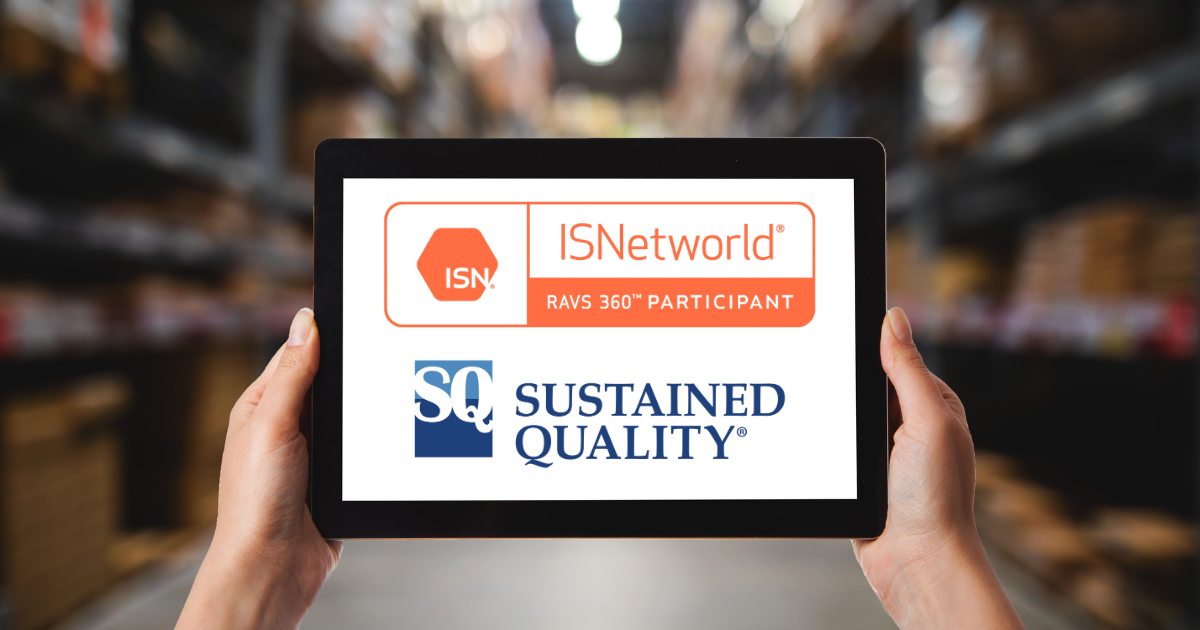
There’s a binder in a lot of facilities. It’s got the right tabs, the right signatures, and all the right language about lockout/tagout, hazard communication, and emergency response. From a documentation standpoint, compliance is achieved.
But anyone who has spent time in industrial operations knows that a well-written safety program and a functioning safety culture are not the same thing. The gap between the two is where incidents happen and where contractor reputations hang in the balance.
Discerning clients aren’t just asking whether your company has safety programs anymore. They’re asking whether those programs are actually working. That’s the question verified safety implementation is designed to answer.
The Numbers Point to a Systemic Problem
The data reflects a persistent challenge. According to the U.S. Bureau of Labor Statistics, private industry employers reported approximately 2.5 million nonfatal workplace injury and illness cases in a recent reporting year — a number that has plateaued despite widespread adoption of formal safety programs. That plateau suggests the issue isn’t necessarily the absence of written programs, but the breakdown in how they’re translated to practice.
The causes are largely systemic: inconsistent onboarding and training reinforcement, gaps in supervisor accountability, communication breakdowns between leadership and frontline teams, and the natural erosion that happens when safety procedures aren’t regularly verified and refreshed. In certain manufacturing environments, those gaps compound quickly, and written programs alone can’t close them.
What Hiring Clients Are Really Looking For
The contractor selection process has matured considerably. Clients who manage large contractor networks have learned that documentation is a starting point, not a finish line. What they’re increasingly seeking is evidence of implementation — proof that safety policies are effectively embedded in day-to-day operations, reinforced through training, and visible in the knowledge and behavior of the people doing the work.
This is a meaningful shift. It means contractors who invest only in paperwork are losing ground to those who invest in culture, consistency, and accountability at every level of their organization. Contractors who recognize that have a real advantage.
When Documentation Isn’t Enough: The Case for Independent Verification
This is precisely where programs like ISN’s RAVS® 360 Implementation Assessment come in. Rather than reviewing documentation alone, RAVS 360 is designed to evaluate whether written HSE programs are actually put into practice — examining craft-level employee knowledge, management-level safety leadership, and the overall health of a contractor’s safety culture. This is verified safety implementation at work.
The assessment includes employee evaluations, a formal interview conducted by ISN HSE professionals, and a review of training and supporting documentation. Identified gaps become tracked open items with defined corrective timelines. This creates a transparent, third-party record of where a contractor’s implementation stands and what they’re doing to strengthen it. It’s worth noting that ISNetworld is the platform behind this process, used by more than 900 companies to manage 90,000 contractors and suppliers across 85+ countries. The scale of that network is part of what gives the designation weight.
For hiring clients, that level of verified accountability is increasingly valuable. For contractors, participation signals something important: a willingness to be evaluated on practice, not just policy. If you’re newer to the ISN ecosystem, our earlier post on what ISN certification means and why clients look for it is a good place to start.
Sustained Quality is proud to be an ISN RAVS® 360 participant — a designation that reflects our commitment to safety that goes beyond documentation and into daily practice.
Verified Safety Implementation as a Competitive Differentiator
In manufacturing and production environments, the contractors who earn long-term partnerships aren’t necessarily the ones with the thickest compliance binders. They’re the ones who can demonstrate — with evidence — that safety is operational, not aspirational.
That distinction matters because hiring clients are under real pressure to reduce serious injury and fatality (SIF) risk across their contractor networks. They need partners who treat verified safety implementation as a standard practice, not an audit-year priority.
If your safety programs are solid but your ability to prove they’re working hasn’t kept pace, that’s the gap worth closing.
Let’s Talk
If safety culture, contractor accountability, or implementation verification are part of your current vendor evaluation conversation, we’d welcome the chance to connect. Reach out to the Sustained Quality team to learn more about how we approach safety at every level of our operation